
Opening Questions:
- Why did Jesus’s miracle in John 2.6-11 leave such an impact on the master of the feast?
- What is the significance of Jesus’s statement in John 2.19?
- What questions do you have from the text?
When we refer to Jesus’ mighty works on the earth, whether healing the sick, calming the stormy sea or raising the dead, we typically call them “miracles”. It’s a good term, one which denotes His power to control all that He created. Yet, when John refers to these mighty works he always calls them “signs”, a term emphasizing how these works pointed to a greater truth about Jesus. “This, the first of his signs, Jesus did at Cana in Galilee, and manifested his glory. And his disciples believed in him.” (John 2:11, ESV) The signs revealed His glory; the signs prompted faith in Him.
Signs play an integral role in John 2. First, there is the record of Jesus’ first sign, the turning of water into wine (vss. 1-11). Then, there is the demand of the Jews that Jesus perform a sign thereby showing His authority to cleanse the Temple, which is a type of sign itself (vss. 13-18). Jesus responded to their demand by prophesying of the greatest sign of His glory: the resurrection (vss. 19-22). The chapter concludes with a statement of how many began to believe in Jesus based on His signs, although He understood the fickle nature of their faith (vss. 23-25). What do these signs reveal about His glory?
Turning Water Into Wine (vss. 1-11)
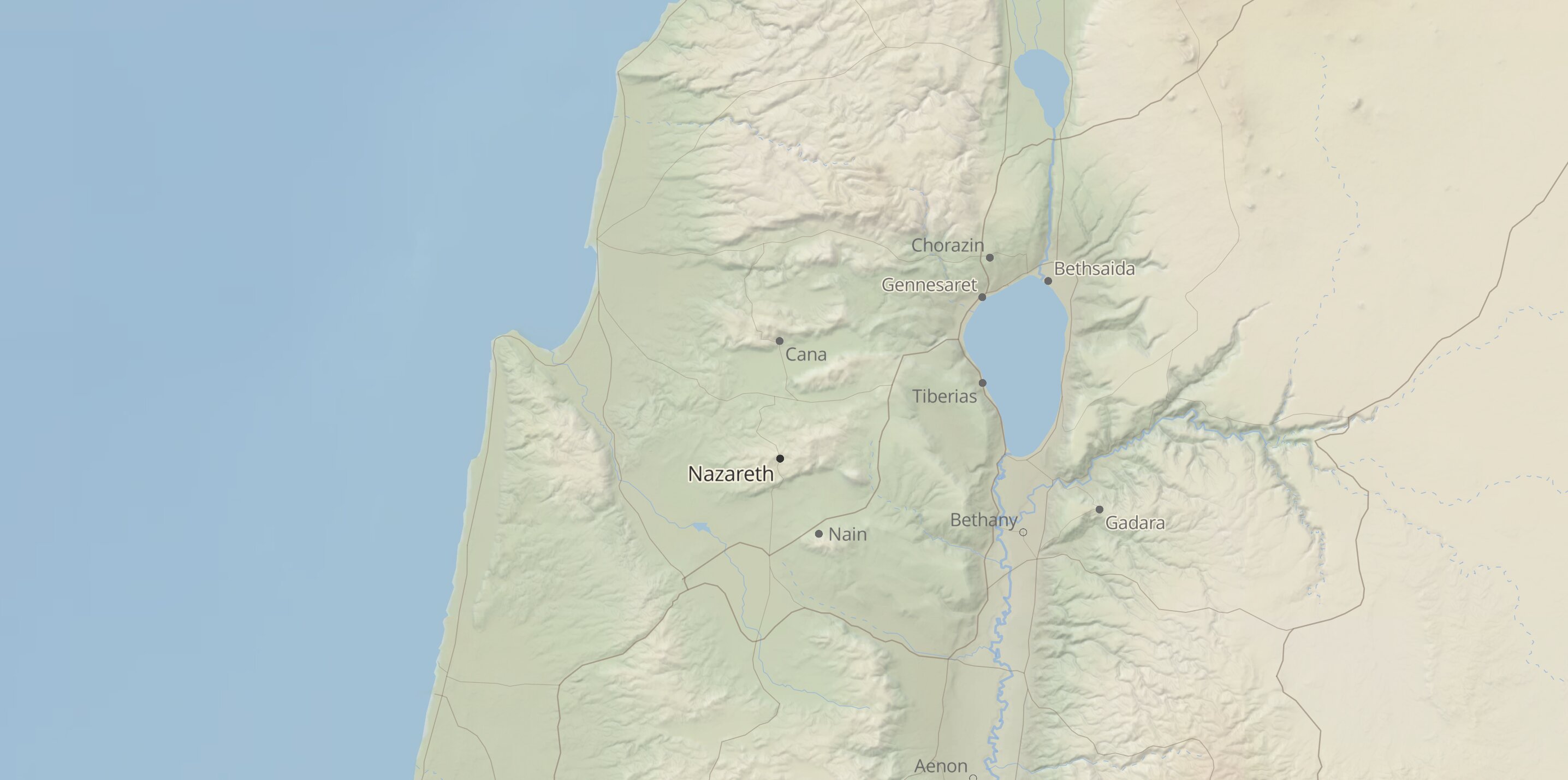
We do not know why Jesus and His disciples were present at the wedding in Cana, although we might assume it was a family relative or friend given the presence of Jesus’ mother, Mary. What we do know is that the wine ran out, an awful embarrassment to the groom and his family. If Mary were related to the groom it would explain her concern. Some questions have been raised by Jesus’ calling His mother, “woman” in vs. 4, but Jesus’ use of the same term in John 19.26 shows that no disrespect was intended. More significant was Jesus’ words, “my hour has not yet come.” As D.A. Carson relates, “Mary wants the wedding to end without embarrassment; Jesus remembers that the prophets characterized the messianic age as a time when wine would flow liberally (e.g. Je. 31:12; Ho. 14:7; Am. 9:13-14; cf. 2 Baruch 29:5; 1 Enoch 10:19).28 Elsewhere he himself adapts the wedding as a symbol for the consummation of the messianic age (e.g. Mt. 22:1-14; Mt 25:1–13). Treating the developing circumstances as an acted parable, Jesus is entirely correct to say that the hour of great wine, the hour of his glorification, has not yet come.”
It is unfortunate that our approach to this sign has often been to discuss the potency of the wine. That is NOT why John recorded this sign; it is NOT the lesson we are to learn. It is significant that the pots which were filled with water were used “for the Jewish custom of purification.” Jesus takes that water and turns it into something better! The point is fairly simple: Jesus came to give something better and He does so abundantly (see John 1.16-17)!
Cleansing the Temple (vss. 12-22)
While selling animals and providing a money exchange might seem to be a benefit for the pilgrims making their way to Jerusalem to worship, it is likely that the location of these activities explains Jesus’ reaction. The money changing and selling of animals would have taken place in the Court of the Gentiles, the outermost court and largest by far. When Jesus cleansed the Temple again at the end of His ministry He said, “Is it not written, ‘My house shall be called a house of prayer for all the nations’? But you have made it a den of robbers.” (Mark 11.17). The Temple was meant to be a place where the nations could learn about God, but the Jews had made that more difficult by making the Court of Gentiles a marketplace! Jesus’ command “do not make my Father’s house a house of trade.” in John 2.16 would indicate the same concern. The Jews had no interest in the world (the Gentiles), but Jesus came to save them (John 1.10-12; 3.16)! His cleansing of the Temple was a “sign” of His desire to save the nations.
No doubt incensed, the Jews demanded to know what authority Jesus had to cleanse the Temple. What sign could He show to back up His actions? Jesus said a sign would be given: “Destroy this temple, and in three days I will raise it up.” The Jews mocked Him, thinking He was speaking of the Jerusalem Temple, a building which Herod had begun renovating in 19 B.C. and would not be completed until A.D. 63. But Jesus’ disciples would come to understand that Jesus was referring to His resurrection.
Many Believe (vss. 23-25)
The signs achieved their purpose; they showed His glory and prompted faith. However, we are given an indication that the faith of many who witnessed His signs would not last. Just as the Father searches the hearts of men (Jeremiah 17.10), so Jesus “knew what was in man.” No doubt He knew that many would turn back (John 6.66), thus He did not entrust Himself to them. Or, as another put it, “He had no faith in their faith” (Vincent quoting Godet).
Textual notes:
- Vs. 3: “A wedding celebration could last as long as a week, and the financial responsibility lay with the groom (cf. 2:9–10). To run out of supplies would be a dreadful embarrassment in a ‘shame’ culture; there is some evidence it could also lay the groom open to a lawsuit from aggrieved relatives of the bride.” (Carson).
- Vs. 4: “the word ‘time’, literally ‘hour’ (hoœra), constantly refers to his death on the cross and the exaltation bound up with it (7:30; 8:20; 12:23, 27; 13:1; 17:1)” (Carson).
- Vs. 6: each jar held 18-27 gallons, thus a total of 108-162 gallons. The Jews believed that stone would not contract uncleanness.
- Vs. 10: the length of wedding feasts (up to 7 days) explain who participants could have “drunk freely” yet Jesus had not provided the means for drunkenness.
- Vs. 12: Capernaum was ~16 miles NE from Cana.
- Vs. 13: John mentions three Passover celebrations (John 2.13; 6.4; 11.55).
- Vs. 17: see Psalm 69.9.
- Vs. 19: Jesus’ words would later be used against Him (Matthew 26.61; 27.40).
- Vs. 20: “The reconstruction of the temple in the form which it had at this time was begun by Herod the Great early in 19 BC. The main part of the work was completed and consecrated in ten years, but other parts were still being carried out; in fact, the finishing touches were not put to the whole enterprise until AD 63, only seven years before its destruction” (FF Bruce).
 Built By Him
Leave a comment