
In our study of Abraham much of our focus has been on the promised offspring, and for good reason. The lack of offspring would test the faith of Abraham and Sarah (see Genesis 15.2; 16.2; etc.), the promised offspring would come in God’s way and in His time (Genesis 17.18-19; 18.14), and most importantly, the promised offspring would ultimately bless all families of the earth (Genesis 12.3; 22.18). But offspring was not the only promise the Lord made to Abraham: “To your offspring I will give this land” (Genesis 12.7; cf. 13.17; 15.18-21). As we will see, the promise of the land is at the heart of chapter 23.
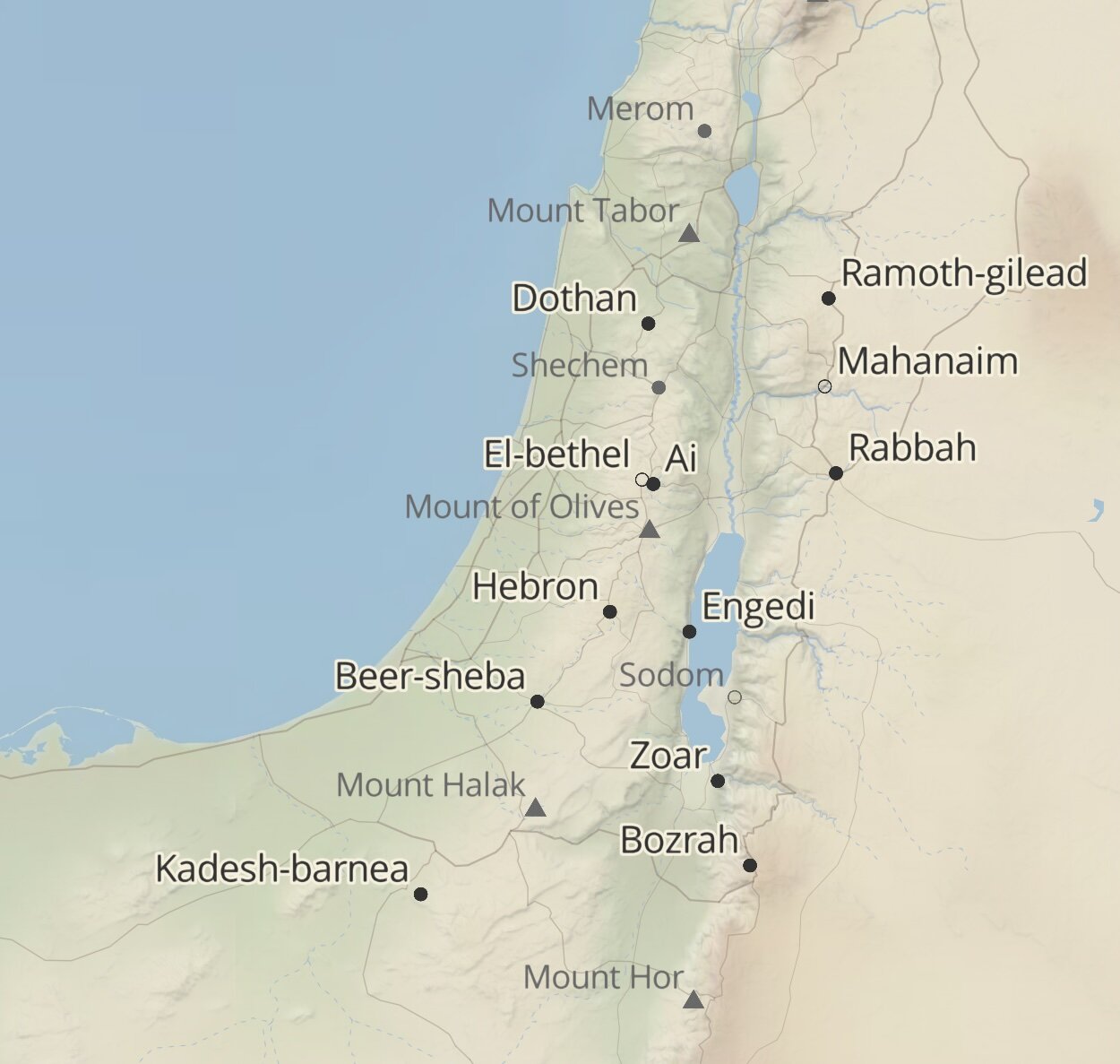
Before looking at the events of this chapter, let’s review Abraham’s time in the promised land. He first arrived at Shechem (Genesis 12.6) then moved on to Bethel and to the Negeb (i.e. south, Genesis 12.8-9). However, Abraham’s initial stay in the land was brief because a famine “forced” him to move to Egypt (Genesis 12.10). Upon returning to the promised land, Abraham and Lot had to separate because the land could not sustain their flocks (Genesis 13.6); Lot journeyed toward Sodom while Abraham moved toward Hebron (Genesis 13.12,18). Abraham would remain around Hebron until close to the time that Isaac would be born, moving south again (Genesis 20.1). Abraham would stay in the region of Beersheba until the events of chapter 23 (see Genesis 22.19).
Notes From The Text:
- Vs. 2, significantly the older name for Hebron is used here. Kiriath-arba was named after an Anakim warrior (Joshua 14.15).
- Vs. 3, “Hittites” is literally “sons of Heth”. Heth was a son of Canaan (Genesis 10.15). The Hittites would form an empire in Asia Minor, but Assyrian and Babylonian records would refer to Canaan as the “land of Hatti”. Significantly, the Hittites were listed as one of the nations living in the land that God would give to Abraham’s offspring (Genesis 15.20, see also Joshua 1.4).
- Vs. 4, Abraham’s words are significant for two reasons. First, Abraham confirms his status as a “sojourner” with the Lord (see Genesis 17.8; Hebrews 11.9). Second, Abraham’s status as a foreigner, with no land of his own, meant that he did not possess any rights in the community.
- Vs. 6, while it could be that the Hittites did in fact honor Abraham as a “prince of God” their offer could have also been meant to keep the patriarch a landless dependent with no rights.
- Vs. 9, “Abraham negotiates for the long term. If he had been willing to accept the land on a grant basis, the land could have been reclaimed in a later generation or in hard times. In contrast, Abraham wants to ‘acquire an inheritable estate.’” (Zondervan Illustrated Bible Background Commentary)
- Vs. 11, “Hittite law codes may explain why Ephron was insisting on the sale of the entire field. If Abraham owned the whole field he would have to assume the Hittite tax (called ilku) obligations.” (James E. Smith)
- Vs. 15, since we do not know the size of the plot of land, it is impossible to know if Ephron was taking advantage of Abraham or not. It was much less than the price Omri paid for the very large site of Samaria (1Kings 16.24) and less than what David paid for the eventual site of the temple (1Chronicles 21.25). However, given that the average wage of a laborer was ten shekels a year, it would seem likely that the sum of four hundred shekels of silver was more than the land was worth.
- Vs. 16, the image is a poignant one. Abraham had lived in the land of promise for sixty years, but owned none of it. Now he must pay what may have been an inflated price, all so that he can bury his dead in the land.
- Vss. 17-18, note that Abraham now has a “possession”, but it was in the “presence of the Hittites”. He owned but a tiny portion of the land, the rest remained the possession of the various peoples (see Genesis 15.18-21).
- Vs. 19, Abraham would be buried in the same cave by his sons (Genesis 25.9-10). Much later, Jacob would instruct his sons to bury him in the same cave (Genesis 49.29-32; 50.13).
- Vs. 20, the language is significant. The field and cave were “made over to Abraham… by the Hittites.” This possession was from man, not from God.
Takeaways:
God would give the land. While chapter 23 paints a touching picture of Abraham’s love for his deceased wife, the events of the chapter would require the patriarch to continue putting his full faith in the Lord. Just as the promised heir could only be gotten from the Lord, so the possession of the land would be the result of the Lord’s gift, and not man’s effort (Genesis 12.7). Consider again some of the details of the story:
- Abraham was sojourning in a location named after a warrior who did not fear the Lord (vs. 2; Joshua 14.15).
- Abraham was seeking to purchase a small portion of land that was in the possession of the Hittites, descendants of the cursed Canaan (Genesis 10.15, see 9.25).
However, Abraham, prince of God, could only secure a field and a cave to bury his dead, and that by paying a hefty price! Abraham would have to trust that the Lord would keep His word to give his descendants the land of the Hittites (Genesis 15.18-21), because clearly Abraham would not be able to secure the promised land on his own. Israel would need to put their faith in the Lord, because they would possess the promised land only by the grace of God (Exodus 6.8). That fact remains unchanged for the people of God (John 14.1-6).
There is something better. This chapter helps us understand the wonderful words found in Hebrews 11.13-16. Even though Abraham had lived in Canaan for 60 years, he still referred to himself as “a sojourner and foreigner” (Genesis 23.4; see Hebrews 11.13). The Hebrew writer makes the point that Abraham’s self-designation as “strangers and exiles” meant that he was “seeking a homeland” (vs. 14), that he desired “a better country, that is, a heavenly one.” Abraham’s sojourn in the land had included famine (12.10), lack of adequate pasture (13.6), conflict (14.1-16) and disputes about water (21.25). While the land was a significant blessing, there was clearly something better that the Lord could and would provide for His people. Indeed, God has provided something better (Hebrews 11.40)!
 Built By Him
Leave a comment