
Chapter 20 sticks out like a sore thumb. In our study we’ve seen Abraham and Sarah struggle with their faith before (lying about Sarai in Genesis 12, securing an heir from Hagar in Genesis 16), but in the last few chapters the faith of Abraham has shone through. He responded with joy at the announcement of Isaac’s birth (Genesis 17.15-17) and made intercession for the righteous (Genesis 18.22-33). The text even ascribed Lot’s salvation to the fact that “God remembered Abraham” (Genesis 19.29). But chapter 20 would seem to show Abraham regress, struggling to fully trust in God and His protection. Some speculate that the events of chapter 20 occured at an earlier point in Abraham’s life, but were simply inserted at this point. However, nothing in the text necessitates this conclusion.
The chapter gives two important lessons. First, we see again that people of faith (Genesis 15.6) and not always perfect in their faith. Second, and more importantly, our attention is brought back to the fact that it was the Lord, and not man, who would bring the promises (Genesis 12.1-3). “on the brink of Isaac’s birth-story here is the very Promise put in jeopardy, traded away for personal safety. If it is ever to be fulfilled, it will owe very little to man. Morally as well as physically, it will clearly have to be achieved by the grace of God.” (Derek Kidner)
Notes From The Text:
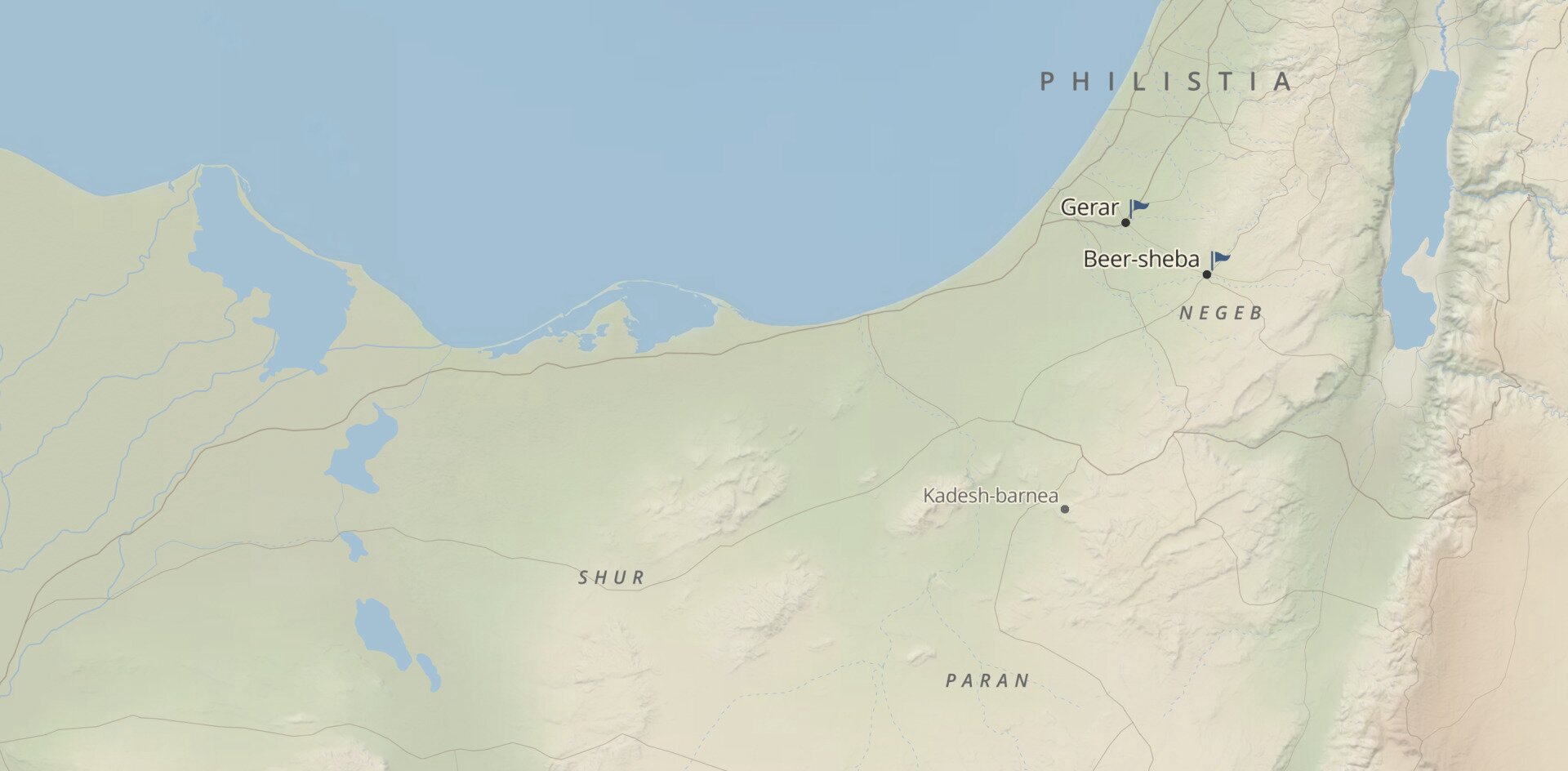
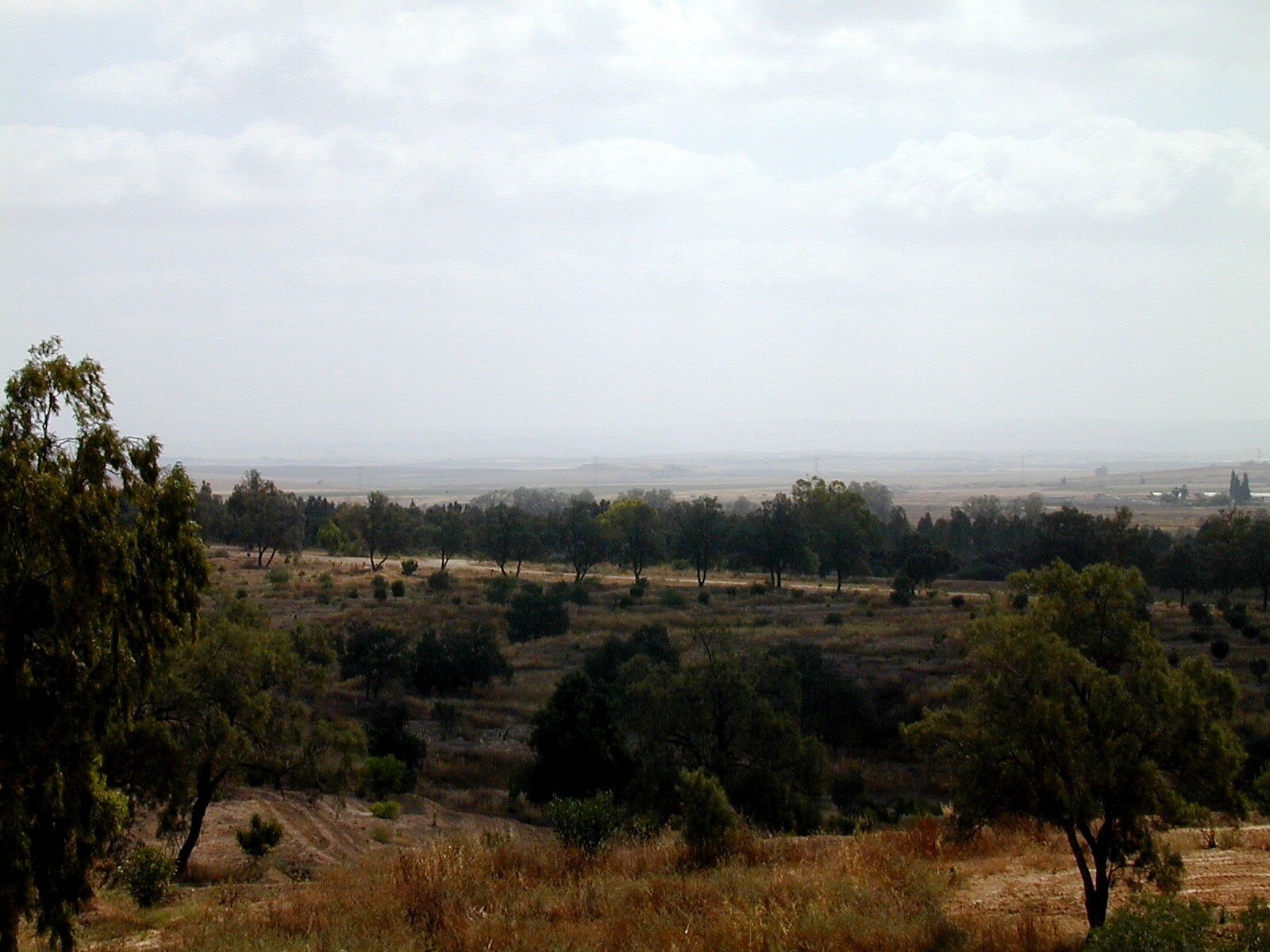
(Gerar. Courtesy of Todd Bolen, http://www.bibleplaces.com)
- Vs. 1, no reason is given for Abraham’s journey toward the southern edge of the promised land. Previously he had dwelt in the region of Hebron, but from this point on both Abraham and Isaac will dwell in the region of Beersheba. Kadesh is an oasis approximately fifty miles south of Beersheba. Shur is thought to be the recognized border of Egypt, a site where the Egyptians had established protective fortresses. Gerar was about 15 miles west-northwest of Beersheba.
- Vs. 2
- Note that this was the standard practice of Abraham and Sarah ever since they left Haran (vs. 13). The fact that the practice had resulted in trouble on only one previous occasion may have emboldened them to continue in this falsehood.
- “Abimelech” was likely a royal title (it means “God the king is my father”). We meet another Abimelech in chapter 26 and another king wearing the same title a thousand years later (note the heading of Psalm 34).
- Some doubt the validity of this account because why would Abimelech wish to take an 89 year old woman as his wife? First, recall that Sarah would live almost another forty years (see Genesis 23.1), thus she would have looked much younger than a someone of similar age today. Second, note that Sarah’s beauty is not mentioned in this passage (contrast with Genesis 12.11). It is likely that Abimelech was seeking an alliance by marriage with the very wealthy chieftain Abraham.
- Vss. 4-5, note that Abimelech appeals to the justice of God just as Abraham had done when interceding for Sodom (see Genesis 18.23,25). Abimelech is showing himself as more righteous in this account than Abraham.
- Vs. 6, note vs. 17. The Lord had given Abimelech some form of bodily affliction which prevented the king from approaching Sarah.
- Vs. 7, to be a prophet was to be a spokesman for a deity. We are not told when Abraham had exercised this function, unless it was relating to others the promises the Lord had made to him (Genesis 12.1-3). Most viewed prophets as having a seat in heavenly counsels and thus could not only deliver the message of the gods, but could also intercede, making petitions to the gods on behalf of others. (This was the function Balak wanted Balaam to serve in Numbers 22-24).
- Vss. 9-10, Abimelech asks Abraham three questions in this passage: What did you do? What did we do to you? Why did you do this? Note the implication of the questions, Abraham had acted out of self interest with little thought for what his actions would do to his wife or to others. Abimelech’s charge that “you have done to me things that ought not to be done” is just.
- Vss. 11-13, Abraham’s defense was threefold: 1) I assumed you didn’t fear God, 2) it’s half true and 3) it’s what we’ve always done. In reality, it was no defense at all.
- Vss. 14-16, again Abimelech showed himself to be righteous in his dealings with Abraham. There would be no marriage alliance, but he granted Abraham the right to dwell wherever he chose. Furthermore, the gift of 1000 pieces of silver was meant to insure that Sarah’s reputation was not blemished. “* Abimelech’s payment to Abraham and Sarah is like a reverse bride price. A bride price was paid by the groom to the family of the bride as surety that the marriage would take place. Here the payment moves the same direction, but the woman is moving the opposite direction—from the would-be husband back to the family. Rather than a bride price, it is a restitution payment restoring the woman to her family intact.” (Zondervan Illustrated Bible Background Commentary) However, note that Abimelech refers to Abraham as Sarah’s “brother”, perhaps spoken sarcastically.
- Vss. 17-18, note vs. 7. The Lord was faithful to His word.
Takeaways:
- Faith can have blindspots. Abraham is lauded for his faith in the New Testament, and rightfully so. He trusted the Lord enough to leave his home for an unknown destination (Hebrews 11.8), to not waiver in faith regarding the Lord’s promise even when he was old and his body “dead” (Romans 4.18-21) and to even sacrifice his own son, believing the Lord would resurrect him from the dead (Hebrews 11.17-19). Truly, Abraham was a “man of faith” (see Galatians 3.9). But Abraham was not perfect in his faith, he had a blindspot. As much as he trusted the Lord to keep His promises, he continued to show lack of faith when it came to his personal safety (Genesis 12.12; 20.11). However, if God Almighty (Genesis 17.1) could fulfill the promises, He could also protect His chosen ones. Israel would also have blindspots, acknowledging that the Lord had delivered them from Egyptian bondage, but doubting His ability to provide (see Exodus 15.24; 16.2-3; etc.). What blindspots do we possess? Whatever they are, we are called to place greater faith in the Lord (1Thessalonians 5.23-24).
- Don’t assume. Abraham lied to Abimelech because he thought, “There is no fear of God at all in this place” (Genesis 20.11). However, Abimelech showed himself to be one who did fear the Lord (vss. 3-8). The old testament will record numerous examples of people outside of the “chosen line” who would exhibit faith in the Lord (see Luke 4.24-27), yet Israel would assume that all others were godless heathen. It is not our call to assume what merits someone possesses or lacks; our call is to live godly lives before all (Matthew 5.13-16) and share the gospel with all (Romans 1.16-17).
 Built By Him
Leave a comment