
In the Old Testament many battles were waged between Jehovah and the false gods worshipped in the ancient near east. The Lord triumphed over the gods of Egypt during the Exodus, over the Philistine gods when the ark was captured and over Baal during the days of Elijah. However, as the gospel ventured into new territory, Jehovah and His Anointed Son would be pitted against new gods, new belief systems and new superstitions. As we will see in this chapter, the Lord would triumph over them all!
Notes From The Text:
Vss. 1-7, Instructing Twelve Disciples
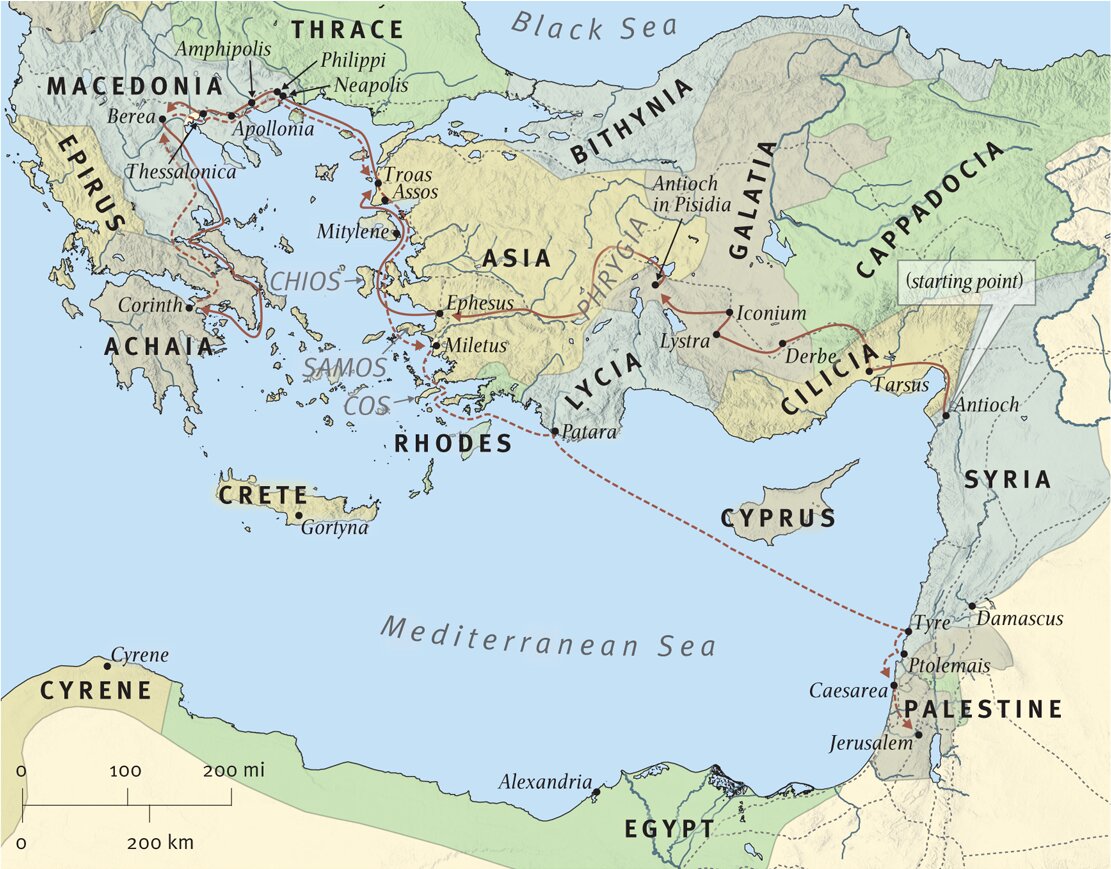
- Vs. 1, Ephesus was known as “the first and greatest metropolis of Asia”. It served as the seat of Roman government in the province for 150 years and boasted a population of ~ 250,000 people. The milestone markers on Roman roads in the province would be numbered from the city of Ephesus.
- Vs. 2
- The disciples mentioned had likely been taught be Apollos (see Acts 18.24-25).
- Based on vs. 6, Paul’s question may have been concerning miraculous gifts from the Spirit. If they were disciples of Christ they would have already received the gift of the Spirit (Acts 2.38).
- Their statement, “No, we have not even heard that there is a Holy Spirit” presented a serious issue. God had promised spiritual renewal (Ezekiel 36.25-27) but they were unaware that this promise had been fulfilled in Jesus (cf. Luke 3.15-16).
- Vs. 3, the importance of baptism is made abundantly clear in this verse. Paul had asked if they had received the Holy Spirit and when they professed ignorance of the Spirit his first question was in regards to their baptism, for baptism involves the receiving of the Spirit (John 3.5; Acts 2.38).
- Vs. 5, their previous baptism was invalid not because it had been done by the wrong person or church; their baptism was invalid because it wasn’t in the name of Jesus, i.e. by His authority and for His purposes. Baptism in the name of Jesus is the result of faith in Him (Mark 16.16), accompanied by repentance, done for the forgiveness of sins and in order to receive the promised Spirit (Acts 2.38).
- Vs. 6, it would seem that Paul’s original question (vs. 2) was with the aim of imparting special abilities of the Spirit to them. Only the apostles had the ability to impart these abilities through the laying on of their hands (see Acts 8.17-18).
Vss. 8-10, The Gospel Spreads Through All Asia
- Vs. 8, Paul’s total time in Ephesus would have been approximately 3 years (see Acts 20.31). Note again that proclaiming the kingdom of God involves both “reasoning” and “persuading”. No-one enters the kingdom by accident, rather men and women consciously choose to submit to the reign of God and Christ.
- Vs. 9, hostile Jews from Ephesus (Asia) would pose a problem for Paul in the future (see Acts 21.27). At this point it would seem that they were content that Paul no longer taught in the synagogue, although they would try to use a later episode of unrest to their advantage (vss. 33-34).
- Vs. 10, this would include cities such as Colosse, Pergamum, Sardis and Philadelphia.
Vss. 11-20, Triumph Over The Occult
- Vs. 11, note that God and not Paul was credited as the source of the miracles (see Mark 16.20).
- Vs. 12, this likely mimicked some of the magical practices common in the city. Note that Paul did not initiate the practice, but it would seem that the Lord worked in this way to impress upon the people of Ephesus that true power came from Him and not the occult.
- Vs. 13, across the Mediteranean world the Jews had a reputation for being able to cast out unclean spirits. Various incantations and exorcism formulas had been compiled into a document known as The Testament of Solomon. Jesus may have referenced this in Luke 11.19.
- Vs. 14, There is some question whether Sceva was of the priestly family, or if he was perhaps a heathen priest, or if he only claimed a priestly background.
- Vs. 19
- “Ephesus was renown as being something of a center for magical practices in the Mediterranean world. The practice of magic was everywhere—it was part of the fabric of common “folk belief”—but Ephesus acquired a significant reputation for it. This reputation was perpetuated, in part, by the so-called “Ephesian Letters” (Ephesia Grammata). These were actually six names—askion, kataskion, lix, tetrax, damnameneus, and aisia—thought to be laden with protective power for warding off evil demons.” (Zondervan Illustrated Bible Background Commentary)
- 50,000 drachmas would have equated to the wages for 50,000 days of labor. Note that the believers in Ephesus weren’t content to merely stop practicing this evil themselves, they didn’t want anyone else to have access either!
Vss. 21-41, Triumph Over The Mother Of The Gods
- Vs. 21, one reason for Paul’s return to Jerusalem would be to deliver aid from the predominantly Gentile churches to their needy Jewish brethren (Romans 15.25; 1Cor. 16.1-3; 2Cor. 8-9). When Paul arrived in Achaia he would write to the saints in Rome, again expressing his desire to visit them (Romans 1.15; 15.23). Paul would make it to Rome, but not in the way he envisioned.
- Vs. 22, Erastus may have been the city treasurer of Corinth (see Romans 16.23). During this time Paul would have penned his first letter to the Corinthians (see 1Corinthians 4.17).
- Vs. 24, While the chief goddess of Ephesus is here called Artemis (or Diana), she was not the same goddess as worshipped by the Greeks and then Romans. She is more closely identified with the Lydian goddess, Cybele, who was venerated as the mother of the gods. Her great temple was viewed as one of the seven wonders of the ancient world and during the Spring pilgrimage was made to Ephesus by all of her worshippers.
- Vs. 25, note that the chief concern of Demetrius was economic. Interesting that the man who made the silver shrines saw them as economic gain, and not as imbued with any mystical properties.
- Vs. 26, see Acts 17.29.
- Vs. 27, the temple of Artemis/Diana took over 200 years to complete and according to Pliny was 425 feet in length, 220 feet wide and supported by 127 columns each of which were 60 feet high.
- Vs. 29, the theater of Ephesus could seat some 25,000 spectators. Gaius may have been a convert from Corinth (see 1Cor. 1.14), Aristarchus was from Thessalonica (see Acts 20.4).
- Vs. 30, Paul had moments of fear (Acts 18.9), but his trust in the Lord was greater.
- Vs. 31, the “Asiarchs” were ten officers elected by the cities of the province. The gospel had certainly influenced all of Asia (vs. 10)! This may have been the occasion when Priscilla and Aquila “risked their necks” for Paul (see Romans 16.3-4).
- Vs. 33, given that the Jews, like the Christians, were monotheists and opposed to idolatry, Alexander may have been trying to defend the Jews against the outcry. This may be the same Alexander of whom Paul would warn Timothy (2Timothy 4.14).
- Vs. 35, myth had it that the image of Artemis which was located in the great temple had fallen from the heavens.
- Vs. 37, “Paul and his preacher friends had not used harsh, reproachful, or scurrilous language as they spoke of the folly of religions such as Ephesian Artemis. They had indeed opposed idolatry; they had reasoned against it; they had performed miracles which showed it to be second rate when compared to Christianity; they had endeavored to turn the people from it. Instead of naming names and ridiculing by name, he drove home principles (‘gods made with hands are no gods at all’) which undermined the very foundations of such pagan religions.” (Garreth Reese)
- Vs. 40, rioting was a capital offense under Roman law.
Postscript: this is all that remains of the great temple of Artemis. Yet, the word of the Lord continues “to increase and prevail mightily” (vs. 20). Jehovah continues to triumph over all challengers!

 Built By Him
Leave a comment